Chatur Kaua aur Lalchi Naag
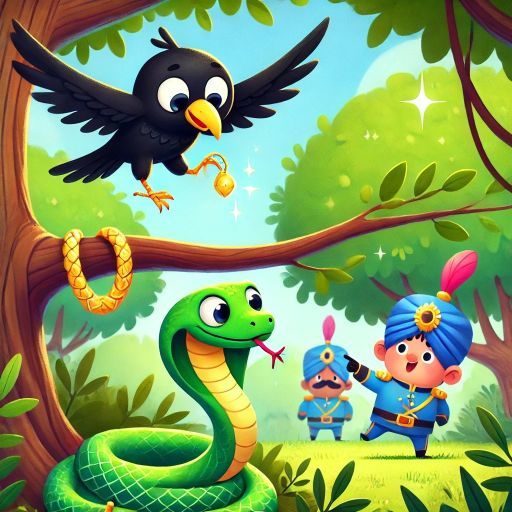
Ek kauwa ped par rehta tha aur apne ande deta tha. Lekin paas ke bil mein rehne wala ek naag roz uske ande kha jata tha. Pareshan hokar, kauwe ne ek chatur lomdi se madad maangi. Lomdi ne ek tarakeeb sujhayi. Kauwa raja ke mahal mein gaya aur rani ka keemti haar churakar naag ke bil mein gira diya. Jab mahal ke sainik haar ki talaash mein aaye, to unhone use naag ke bil mein paaya aur naag ko maar diya. Ab naag ke mar jaane ke baad, kauwa bina kisi dar ke apne ande de sakta tha. Shiksha: Buddhi se badi se badi samasya hal ki ja sakti hai.
The Clever Crow and the Greedy Cobra
A crow lived in a tree and laid eggs. But a cobra living in a nearby hole would eat her eggs every time. Distressed, the crow sought help from a clever fox. The fox suggested a trick. The crow went to the king’s palace, stole the queen’s precious necklace, and dropped it into the cobra’s hole. When the palace guards came searching for the necklace, they found it in the cobra’s den and killed the cobra. With the cobra gone, the crow could now lay her eggs without fear. Moral: Intelligence can solve even the biggest problems.
Glossary
Story Title: Chatur Kaua aur Lalchi Naag
Chatur: Clever
Kaua: Crow
Aur: And
Lalchi: Greedy
Naag: Cobra
(Meaning: The Clever Crow and the Greedy Cobra)
Sentence 1:
"Ek kauwa ped par rehta tha aur apne ande deta tha."
Ek: One / A
Kaua: Crow
Ped: Tree
Par: On
Rehta tha: Used to live / Lived
Aur: And
Apne: His own
Ande: Eggs
Deta tha: Used to lay
(Meaning: A crow lived on a tree and laid eggs.)
Sentence 2:
"Lekin paas ke bil mein rehne wala ek naag roz uske ande kha jata tha."
Lekin: But
Paas: Nearby
Ke: Of
Bil: Hole (Snake's den)
Mein: In
Rehne wala: The one who lived
Ek: One / A
Naag: Cobra
Roz: Every day / Daily
Uske: His / Its
Ande: Eggs
Kha jata tha: Used to eat
(Meaning: But a cobra living in a nearby hole used to eat his eggs every day.)
Sentence 3:
"Pareshan hokar, kauwe ne ek chatur lomdi se madad maangi."
Pareshan: Troubled / Distressed
Hokar: Becoming / Being
Kauwe: Crow (here in plural form but refers to the same crow)
Ne: (Indicates subject of the sentence)
Ek: One / A
Chatur: Clever
Lomdi: Fox
Se: From
Madad: Help
Maangi: Asked
(Meaning: Being troubled, the crow asked a clever fox for help.)
Sentence 4:
"Lomdi ne ek tarakeeb sujhayi."
Lomdi: Fox
Ne: (Indicates subject of the sentence)
Ek: One / A
Tarakeeb: Trick / Idea / Plan
Sujhayi: Suggested
(Meaning: The fox suggested a trick.)
Sentence 5:
"Kaua raja ke mahal mein gaya aur rani ka keemti haar churakar naag ke bil mein gira diya."
Kaua: Crow
Raja: King
Ke: Of
Mahal: Palace
Mein: In
Gaya: Went
Aur: And
Rani: Queen
Ka: 's (Possessive form)
Keemti: Valuable / Precious
Haar: Necklace
Churakar: By stealing / After stealing
Naag: Cobra
Ke: Of
Bil: Hole / Den
Mein: In
Gira diya: Dropped
(Meaning: The crow went to the king’s palace, stole the queen’s precious necklace, and dropped it in the cobra’s hole.)
Sentence 6:
"Jab mahal ke sainik haar ki talaash mein aaye, to unhone use naag ke bil mein paaya aur naag ko maar diya."
Jab: When
Mahal: Palace
Ke: Of
Sainik: Soldiers / Guards
Haar: Necklace
Ki: Of
Talaash: Search
Mein: In
Aaye: Came
To: Then
Unhone: They
Use: It
Naag: Cobra
Ke: Of
Bil: Hole
Mein: In
Paaya: Found
Aur: And
Naag: Cobra
Ko: (Object indicator)
Maar diya: Killed
(Meaning: When the palace guards came searching for the necklace, they found it in the cobra’s hole and killed the cobra.)
Sentence 7:
"Ab naag ke mar jaane ke baad, kauwa bina kisi dar ke apne ande de sakta tha."
Ab: Now
Naag: Cobra
Ke: Of
Mar jaane: Dying / Death
Ke baad: After
Kaua: Crow
Bina: Without
Kisi: Any
Dar: Fear
Ke: Of
Apne: His own
Ande: Eggs
De sakta tha: Could lay
(Meaning: Now, after the cobra's death, the crow could lay his eggs without any fear.)
Moral:
"Shiksha: Buddhi se badi se badi samasya hal ki ja sakti hai."
Shiksha: Moral / Lesson
Buddhi: Intelligence / Wisdom
Se: With / By
Badi se badi: The biggest of all
Samasya: Problem
Hal: Solution / Solved
Ki ja sakti hai: Can be done / Can be solved
(Meaning: Moral: Even the biggest problem can be solved with intelligence.)