Narakasura Ki Kahani
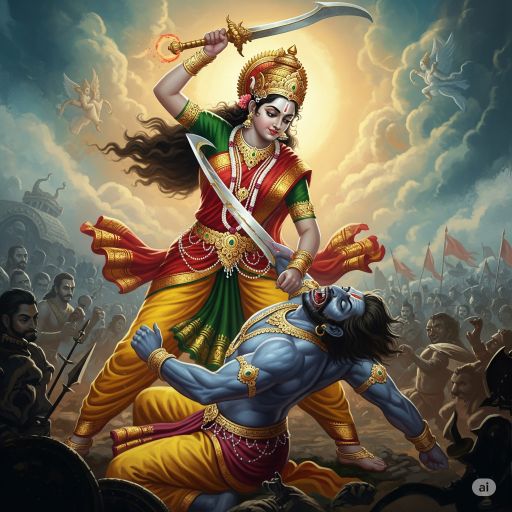
Bohut samay pehle, Narakasura naam ka ek asur raja tha.Woh Pragjyotishpur naam ke rajya par raaj karta tha aur bohut hi cruel aur ahankaari tha. Usne bhagwan se vardaan liya tha ki use sirf uski maa hi maar sakti thi. Is wajah se uska mann aur bigad gaya. Usne devtaon ko hara diya, unka swarg lok cheen liya, aur 16,000 rajkumariyon ko bandi bana kar apne mahal mein rakh liya. Devta bhagwan Krishna ke paas gaye aur unse madad maangi. Krishna apni patni Satyabhama ke saath Narakasura se ladne gaye. Yudh ke dauraan, Narakasura ne Krishna ko ghaayal kar diya. Krishna ko chot lagte hi Satyabhama ne dhanush uthaya aur Narakasura ko ek teer se maar diya — kyunki woh Narakasura ki maa ka roop thi.
Marnese pehle Narakasura ne apne paapon ke liye shama maangi aur kaha ki log uski mrityu ka utsav manayein, deep jalaakar. Tab se Naraka Chaturdashi ke roop mein Diwali ka ek din manaya jaata hai, jo buraai par achchai ki jeet ka prateek hai.
The Story of Narakasura
Long ago, there was a powerful demon king named Narakasura. He ruled over the kingdom of Pragjyotishpur (near present-day Assam) and became very arrogant and evil. Narakasura was blessed with a boon that he could only be killed by his mother, so he thought no one could ever defeat him. He started attacking heaven, defeating gods, and capturing 16,000 princesses, locking them in his palace. The gods went to Lord Krishna for help. Krishna took his wife Satyabhama, who was the earthly incarnation of Narakasura’s mother (unknowingly), and rode to battle in his chariot. During the fierce battle, Narakasura injured Krishna. Seeing Krishna hurt, Satyabhama picked up a bow and arrow and shot Narakasura, fulfilling the prophecy.
With his last breath, Narakasura realized his sins and asked for forgiveness. He requested that people celebrate his death as a festival of light, not sadness. The day before Diwali (called Naraka Chaturdashi) is celebrated in South India as the victory of good over evil.
Glossary
Sentence 1
Bohut samay pehle, Narakasura naam ka ek asur raja tha.
Bohut: Very
Samay: Time
Pehle: Before/ago
Naam: Name
Ek: One
Asur: Demon
Raja: King
Tha: Was
(Meaning: A long time ago, there was a demon king named Narakasura.)
Sentence 2
Woh Pragjyotishpur naam ke rajya par raaj karta tha aur bohut hi krur aur ahankaari tha.
Woh: He
Naam ke: Named
Rajya: Kingdom
Par: Over/on
Raaj karta tha: Ruled
Aur: And
Bohut hi: Very
krur: Cruel
Ahankaari: Arrogant
Tha: Was
(Meaning: He ruled the kingdom of Pragjyotishpur and was very cruel and arrogant.)
Sentence 3
Usne bhagwan se vardaan liya tha ki use sirf uski maa hi maar sakti thi.
Usne: He
Bhagwan se: From God
Vardaan: Boon/Blessing
Liya tha: Had received
Ki: That
Use: Him
Sirf: Only
Uski: His
Maa: Mother
Hi: Only
Maar sakti thi: Could kill
(Meaning: He got a boon from God that only his mother could kill him.)
Sentence 4
Is wajah se uska mann aur bigad gaya.
Is wajah se: Because of this/for this reason
Uska: His
Mann: Mind/nature
Aur: More
Bigad: Worse
Bigad gaya: Became worse/Got spoiled
(Meaning: Because of this, he became even more wicked.)
Sentence 5
Usne devtaon ko hara diya, unka swarg lok cheen liya.
Usne: He
Devtaon ko: The gods
Hara diya: Defeated
Unka: Their
Swarg: Heaven
Swarg lok: Heavenly realm
Cheen liya: Snatched/took away
(Meaning: He defeated the gods and took away their heavenly kingdom.)
Sentence 6
Aur 16,000 rajkumariyon ko bandi bana kar apne mahal mein rakh liya.
Aur: And
Rajkumariyon ko: Princesses
Bandi bana kar: By imprisoning
Apne: His own
Mahal mein: In the palace
Rakh liya: Kept
(Meaning: And he imprisoned 16,000 princesses in his palace.)
Sentence 7
Devta bhagwan Krishna ke paas gaye aur unse madad maangi.
Devta: Gods
Bhagwan Krishna ke paas: To Lord Krishna
Gaye: Went
Aur: And
Unse: From him
Madad: Help
Maangi: Sought
Madad maangi: Asked for help
(Meaning: The gods went to Lord Krishna and asked for help.)
Sentence 8
Krishna apni patni Satyabhama ke saath Narakasura se ladne gaye.
Patni: Wife
Apni patni: his wife
Satyabhama ke saath: With Satyabhama
Narakasura se: With Narakasura
Ladne gaye: Went to fight
(Meaning: Krishna went with his wife Satyabhama to fight Narakasura.)
Sentence 9
Yudh ke dauraan, Narakasura ne Krishna ko ghaayal kar diya.
Yudh: War
Yudh ke dauraan: During the war/battle
Ghaayal kar diya: Injured
(Meaning: During the battle, Narakasura injured Krishna.)
Sentence 10
Krishna ko chot lagte hi Satyabhama ne dhanush uthaya aur Narakasura ko ek teer se maar diya.
Chot lagte hi: As soon as he got hurt
Dhanush: Bow
Dhanush uthaya: Picked up the bow
Aur: And
Ek teer se: With one arrow
Maar diya: killed
(Meaning: As soon as Krishna was hurt, Satyabhama picked up the bow and shot Narakasura with an arrow.)
Sentence 11
Kyuki woh Narakasura ki maa ka roop thi.
Kyuki: Because
Woh: She
Narakasura ki: Of Narakasura
Maa ka roop: Form of mother
Thi: Was
(Meaning: Because she was a form of Narakasura’s mother.)
Sentence 12
Marnese pehle Narakasura ne apne paapon ke liye shama maangi.
Marne: To die
Marnese pehle: Before dying
Paap: Sin
Apne paapon ke liye: For his sins
kshama: Forgiveness
Shama maangi: Asked for forgiveness
(Meaning: Before dying, Narakasura asked for forgiveness for his sins.)
Sentence 13
Aur kaha ki log uski mrityu ka utsav manayein, deep jalaakar.
Aur kaha: And said
Ki: that
Log: People
Mrityu: Death
Uski mrityu ka: Of his death
Utsav: Celebration
Manayein: Should celebrate
Deep jalaakar: By lighting lamps
(Meaning: And said that people should celebrate his death by lighting lamps.)
Sentence 14
Tab se Naraka Chaturdashi ke roop mein Diwali ka ek din manaya jaata hai.
Tab se: Since then
Naraka Chaturdashi ke roop mein: In the form of Naraka Chaturdashi
Diwali ka ek din: One day of Diwali
Manaya: Celebrated
Manaya jaata hai: Is celebrated
(Meaning: Since then, one day of Diwali is celebrated as Naraka Chaturdashi.)
Sentence 15
Jo buraai par achchai ki jeet ka prateek hai.
Jo: Which
Buraai: Evil
Buraai par: Over evil
Achchai ki: Of good
Jeet: Victory
Prateek: Symbol
Prateek hai: Is a symbol
(Meaning: Which is a symbol of the victory of good over evil.)