Kachhua Aur Do Hans
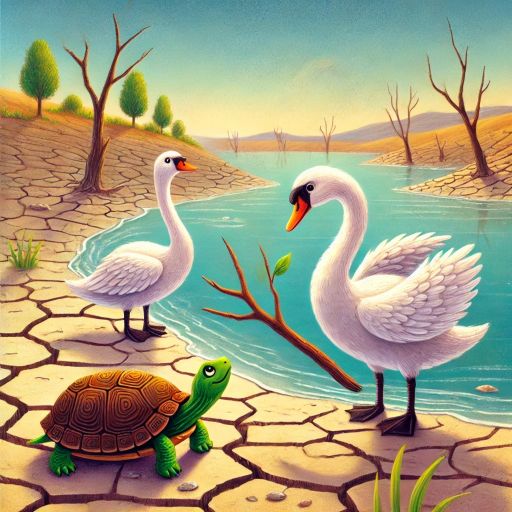
Ek baar, ek kachhua jheel ke kinaare rahata tha aur usakee do hanson se dostee ho gaee. Ek garmee mein, jheel sookhane lagee, to hanson ne ek naee jheel par jaane ka phaisala kiya aur kachhue ko bhee saath le jaane kee peshakash kee. Unhonne kachhue se kaha ki vah apanee chonch se ek lakadee pakade aur ve use hava mein le jaenge. Lekin unhonne use chetaavanee dee ki vah bilkul na bole. Udaan ke dauraan, neeche ke log yah drshy dekhakar hansane lage. Kachhua khud ko rok nahin saka aur javaab dene ke lie apana munh khol diya, jisase vah neeche girakar mar gaya. Yah kahaanee sikhaatee hai ki sahee samay par chup rahana aur vyarth kee baaton se bachana bahut jarooree hai.
Turtle and the Swans
Once, a turtle lived near a lake and became friends with two swans. One summer, the lake began drying up, so the swans decided to fly to a new lake and offered to take the turtle along. They asked the turtle to hold a stick with its mouth while they carried it in the air. However, they warned him not to speak. As they flew, people below saw them and started laughing. The turtle, unable to resist, opened his mouth to respond and fell to his death. The story teaches that one must learn to stay silent at the right time and control unnecessary speech.
Glossary
Kachhua Aur Do Hans
Kachhua: Tortoise
Aur: And
Do: Two
Hans: Swans
(Meaning: The Tortoise and the Two Swans)
Sentence 1:
"Ek baar, ek kachhua jheel ke kinaare rahata tha aur usakee do hanson se dostee ho gaee."
Ek baar: Once upon a time
Ek: A / One
Kachhua: Tortoise
Jheel: Lake
Ke kinaare: By the shore / At the edge
Rahata tha: Lived
Aur: And
Usakee: His / Its
Do: Two
Hanson: Swans (plural of Hans)
Se: With
Dostee: Friendship
Ho gaee: Happened
(Meaning: Once upon a time, a tortoise lived by the shore of a lake and became friends with two swans.)
Sentence 2:
"Ek garmee mein, jheel sookhane lagee, to hanson ne ek naee jheel par jaane ka phaisala kiya aur kachhue ko bhee saath le jaane kee peshakash kee."
Ek garmee mein: One summer
Jheel: Lake
Sookhane lagee: Started drying up
To: So / Then
Hanson: Swans
Ne: (Subject marker)
Ek naee jheel: A new lake
Par: To
Jaane ka: Of going
Phaisaala kiya: Decided
Aur: And
Kachhue: Tortoise
Ko: (Object marker)
Bhee: Also
Saath: Along
Le jaane: To take along
Kee: Of
Peshakash: Proposal / Offer
(Meaning: One summer, as the lake started drying up, the swans decided to go to a new lake and offered to take the tortoise along.)
Sentence 3:
"Unhonne kachhue se kaha ki vah apanee chonch se ek lakadee pakade aur ve use hava mein le jaenge."
Unhonne: They (The swans)
Kachhue se: To the tortoise
Kaha: Said
Ki: That
Vah: He (Tortoise)
Apanee: His / Its own
Chonch: Beak / Mouth
Se: With
Ek: A / One
Lakadee: Stick
Pakade: Hold
Aur: And
Ve: They
Use: Him / It (The tortoise)
Hava mein: In the air
Le jaenge: Will take
(Meaning: They told the tortoise to hold a stick with his mouth, and they would carry him in the air.)
Sentence 4:
"Lekin unhonne use chetaavanee dee ki vah bilkul na bole."
Lekin: But
Unhonne: They (The swans)
Use: Him / It (The tortoise)
Chetaavanee dee: Warned
Ki: That
Vah: He / It (The tortoise)
Bilkul: At all
Na bole: Should not speak
(Meaning: But they warned him not to speak at all.)
Sentence 5:
"Udaan ke dauraan, neeche ke log yah drshy dekhakar hansane lage."
Udaan ke dauraan: During the flight
Neeche ke log: People below
Yah drshy: This scene / Sight
Dekhakar: Seeing
Hansane lage: Started laughing
(Meaning: During the flight, the people below saw this sight and started laughing.)
Sentence 6:
"Kachhua khud ko rok nahin saka aur javaab dene ke lie apana munh khol diya, jisase vah neeche girakar mar gaya."
Kachhua: Tortoise
Khud ko: Himself
Rok nahin saka: Could not stop (himself)
Aur: And
Javaab dene ke lie: To reply / To answer
Apana munh: His mouth
Khol diya: Opened
Jisase: Because of which
Vah: He (The tortoise)
Neeche: Down / Below
Girakar: Falling
Mar gaya: Died
(Meaning: The tortoise could not stop himself and opened his mouth to reply, which made him fall down and die.)
Moral (Shiksha):
"Yah kahaanee sikhaatee hai ki sahee samay par chup rahana aur vyarth kee baaton se bachana bahut jarooree hai."
Yah: This
Kahaanee: Story
Sikhaatee hai: Teaches
Ki: That
Sahee samay par: At the right time
Chup rahana: Staying silent
Aur: And
Vyarth kee baaton: Useless words / Meaningless talks
Se bachana: To avoid
Bahut: Very
Jarooree hai: Is important
(Meaning: This story teaches that staying silent at the right time and avoiding unnecessary talk is very important.)