Kanjoos aur Uska Sona
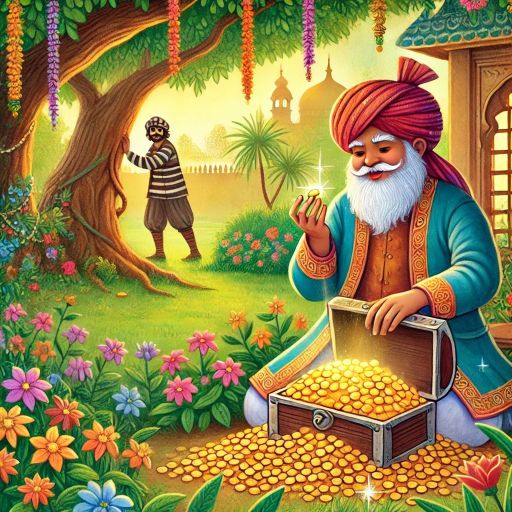
Ek baar ek kanjoos aadmi tha, jiske paas bahut saara sona tha. Usne apne bagiche ke ek ped ke neeche sona gad diya. Har din, vah vahaan jaakar mitti khodta, apne sone ko dekhta aur phir use wapas dhak deta. Vah kabhi bhi us sone ka upayog nahi karta tha—sirf usko dekhkar khush hota tha.Ek din, ek chor jo use dekh raha tha, us jagah ka raaz samajh gaya. Raat ko, usne sona nikal liya aur chura kar chala gaya. Agle din, jab kanjoos ne dekha ki uska sona gaayab hai, to vah zor-zor se chillane laga. Uska ek padosi aaya aur puchha ki kya hua. Jab kanjoos ne sab bataya, to padosi bola, "Agar tum ise kabhi istemal hi nahi kar rahe the, to is jagah ek pathar gad dete, vah bhi tumhare sone jitna hi kaam ka hota!" Shiksha: Dhan ka mahatva tabhi hai jab use samajhdaari se istemal kiya jaaye.
The Miser and His Gold
Once upon a time, a miser had a great amount of gold, which he buried under a tree in his garden. Every day, he would go to the spot, dig up the gold, and admire it before covering it again. He never spent or used the gold—he only liked looking at it. One day, a thief who had been watching him discovered the hiding place. That night, the thief dug up the gold and stole it. The next morning, when the miser found his treasure missing, he cried out in despair. A neighbor, hearing his wails, asked what happened. When the miser explained, the neighbor said, "Why be so sad? If you never used the gold, you might as well have just buried a stone there—it would serve the same purpose!" Moral of the story: Wealth is useless if it is not used wisely.
Glossary
Story Title: Kanjoos aur Uska Sona
Kanjoos: Miser (a person who hoards wealth)
Aur: And
Uska: His
Sona: Gold
(Meaning: The Miser and His Gold)
Sentence 1:
"Ek baar ek kanjoos aadmi tha, jiske paas bahut saara sona tha."
Ek baar: Once upon a time
Ek: One / A
Kanjoos: Miser (a person who hoards wealth)
Aadmi: Man
Tha: Was
Jiske: Whose
Paas: Near / With
Bahut saara: A lot of / Plenty
Sona: Gold
Tha: Was
(Meaning: Once upon a time, there was a miserly man who had a lot of gold.)
Sentence 2:
"Usne apne bagiche ke ek ped ke neeche sona gad diya."
Usne: He (past tense usage)
Apne: His own
Bagiche: Garden
Ke: Of
Ek: One / A
Ped: Tree
Ke neeche: Under / Below
Sona: Gold
Gad diya: Buried
(Meaning: He buried his gold under a tree in his garden.)
Sentence 3:
"Har din, vah vahaan jaakar mitti khodta, apne sone ko dekhta aur phir use wapas dhak deta."
Har din: Every day
Vah: He
Vahaan: There
Jaakar: After going
Mitti: Soil
Khodta: Digs
Apne: His own
Sone ko: Gold (object form)
Dekhta: Sees / Looks at
Aur phir: And then
Use: It
Wapas: Back
Dhak deta: Covers
(Meaning: Every day, he would go there, dig the soil, look at his gold, and then cover it back.)
Sentence 4:
"Vah kabhi bhi us sone ka upayog nahi karta tha—sirf usko dekhkar khush hota tha."
Vah: He
Kabhi bhi: Ever / At any time
Us: That
Sone ka: Of the gold
Upayog: Use
Nahi: No / Not
Karta tha: Used to do
Sirf: Only
Usko: Him / It
Dekhkar: By looking at
Khush: Happy
Hota tha: Used to become
(Meaning: He never used his gold—he only felt happy looking at it.)
Sentence 5:
"Ek din, ek chor jo use dekh raha tha, us jagah ka raaz samajh gaya."
Ek din: One day
Ek: One / A
Chor: Thief
Jo: Who / That
Use: Him / It
Dekh raha tha: Was watching
Us: That
Jagah: Place
Ka: Of
Raaz: Secret
Samajh gaya: Understood
(Meaning: One day, a thief who was watching him understood the secret of that place.)
Sentence 6:
"Raat ko, usne sona nikal liya aur chura kar chala gaya."
Raat ko: At night
Usne: He (past tense)
Sona: Gold
Nikal liya: Took out
Aur: And
Chura kar: By stealing
Chala gaya: Went away
(Meaning: At night, he took out the gold and stole it away.)
Sentence 7:
"Agle din, jab kanjoos ne dekha ki uska sona gaayab hai, to vah zor-zor se chillane laga."
Agle din: Next day
Jab: When
Kanjoos: Miser
Ne: (Indicates past tense)
Dekha: Saw
Ki: That
Uska: His
Sona: Gold
Gaayab hai: Is missing
To: Then
Vah: He
Zor-zor se: Loudly
Chillane laga: Started shouting
(Meaning: The next day, when the miser saw that his gold was missing, he started shouting loudly.)
Sentence 8:
"Uska ek padosi aaya aur puchha ki kya hua."
Uska: His
Ek: One / A
Padosi: Neighbor
Aaya: Came
Aur: And
Puchha: Asked
Ki: That
Kya: What
Hua: Happened
(Meaning: His neighbor came and asked what had happened.)
Sentence 9:
"Jab kanjoos ne sab bataya, to padosi bola, 'Agar tum ise kabhi istemal hi nahi kar rahe the, to is jagah ek pathar gad dete, vah bhi tumhare sone jitna hi kaam ka hota!'"
Jab: When
Kanjoos: Miser
Ne: (Past tense marker)
Sab: Everything
Bataya: Told
To: Then
Padosi: Neighbor
Bola: Said
Agar: If
Tum: You
Ise: This
Kabhi: Ever
Istemaal: Use / Usage
Hi nahi: Not at all
Kar rahe the: Were doing
To: Then
Is jagah: This place
Ek: One / A
Pathar: Stone
Gad dete: Would have buried
Vah bhi: That too
Tumhare: Your
Sone: Gold
Jitna hi: As much as
Kaam ka: Useful
Hota: Would have been
(Meaning: When the miser told him everything, the neighbor said, "If you were never going to use it, you could have just buried a stone here. It would have been just as useful as your gold!")
Moral:
"Dhan ka mahatva tabhi hai jab use samajhdaari se istemal kiya jaaye."
Dhan: Wealth / Money
Ka mahatva: Importance of
Tabhi hai: Is only when
Jab: When
Use: It
Samajhdaari se: Wisely
Istemaal kiya jaaye: Is used
(Meaning: Wealth is only valuable when it is used wisely.)