Teen Machhaliyon Kee Kahaanee
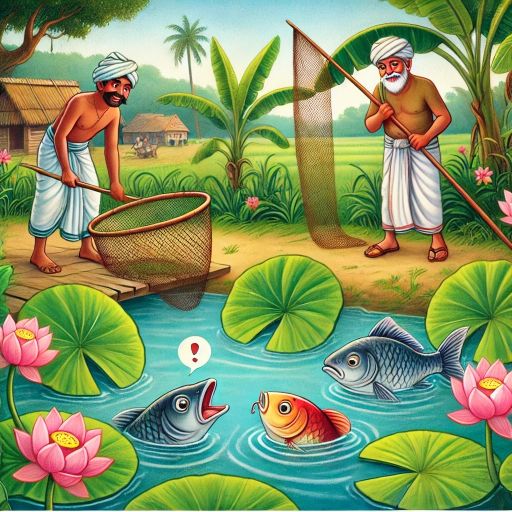
Teen machhaliyaan ek taalaab mein rahatee theen. Ek din kuchh machhuaare vahaan se guzare aur dekha ki taalaab mein bahut saaree machhaliyaan hain. Unhonne phaisala kiya ki ve agalee subah aakar machhaliyaan pakadenge. Samajhadaar machhalee khatare ko pahale hee samajh gaee aur taalaab ke ek chhote se raaste se nikalakar bach gaee. Chatur machhalee pahale to rukee rahee, lekin jab machhuaaron ne use pakad liya, to usane maree huee hone ka naatak kiya. Machhuaaron ne use bekaar samajhakar paanee mein phenk diya, aur vah bach gaee. Lekin laaparavaah machhalee ne koee chinta nahin kee aur kuchh nahin kiya. Ant mein, vah machhuaaron ke jaal mein phans gaee aur pakadee gaee. Yah kahaanee sikhaatee hai ki samajhadaaree, buddhimaanee aur samay par sahee kadam uthaane se ham khatare se bach sakate hain, lekin laaparavaahee se nukasaan ho sakata hai.
The Three Fishes
The Three Fishes is an ancient fable from the Panchatantra that teaches the importance of wisdom, quick thinking, and taking action in times of danger. One day, fishermen pass by the pond and notice it is full of fish. They decide to return the next morning to catch them. The Wise Fish immediately realizes the danger and escapes through a small opening in the pond, saving itself. The Intelligent Fish hesitates but later pretends to be dead when caught and is thrown back into the water, escaping. However, the Careless Fish ignores the warning, does nothing, and is eventually caught by the fishermen. The story teaches that foresight, intelligence, and the ability to adapt can save one from danger, while carelessness can lead to disaster.
Glossary
Teen Machhaliyon Kee Kahaanee
Teen: Three
Machhaliyon: Fishes (plural of Machhali)
Kee: Of
Kahaanee: Story
(Meaning: The Story of Three Fishes)
Sentence 1:
"Teen machhaliyaan ek taalaab mein rahatee theen."
Teen: Three
Machhaliyaan: Fishes
Ek: One / A
Taalaab: Pond
Mein: In
Rahatee theen: Used to live
(Meaning: Three fishes lived in a pond.)
Sentence 2:
"Ek din kuchh machhuaare vahaan se guzare aur dekha ki taalaab mein bahut saaree machhaliyaan hain."
Ek din: One day
Kuchh: Some
Machhuaare: Fishermen
Vahaan: There
Se: From
Guzare: Passed
Aur: And
Dekha: Saw
Ki: That
Taalaab: Pond
Mein: In
Bahut saaree: Many
Machhaliyaan: Fishes
Hain: Are
(Meaning: One day, some fishermen passed by and saw that there were many fishes in the pond.)
Sentence 3:
"Unhonne phaisala kiya ki ve agalee subah aakar machhaliyaan pakadenge."
Unhonne: They
Phaisaala kiya: Decided
Ki: That
Ve: They
Agalee: Next
Subah: Morning
Aakar: Coming
Machhaliyaan: Fishes
Pakadenge: Will catch
(Meaning: They decided that they would come the next morning to catch the fishes.)
Sentence 4:
"Samajhadaar machhalee khatare ko pahale hee samajh gaee aur taalaab ke ek chhote se raaste se nikalakar bach gaee."
Samajhadaar: Wise / Intelligent
Machhalee: Fish
Khatare: Danger
Ko: (Object marker)
Pahale hee: In advance / Beforehand
Samajh gaee: Understood
Aur: And
Taalaab: Pond
Ke: Of
Ek: One / A
Chhote se: Small
Raaste: Path / Route
Se: Through
Nikalakar: Escaping / Coming out
Bach gaee: Was saved
(Meaning: The wise fish understood the danger in advance and escaped through a small path in the pond.)
Sentence 5:
"Chatur machhalee pahale to rukee rahee, lekin jab machhuaaron ne use pakad liya, to usane maree huee hone ka naatak kiya."
Chatur: Clever / Smart
Machhalee: Fish
Pahale: At first
To: (Emphasizer)
Rukee rahee: Stayed / Stopped
Lekin: But
Jab: When
Machhuaaron: Fishermen
Ne: (Subject marker)
Use: Her / It
Pakad liya: Caught
To: Then
Usane: She
Maree huee: Dead (pretending)
Hone ka: Of being
Naatak kiya: Pretended
(Meaning: The clever fish stayed back at first, but when the fishermen caught her, she pretended to be dead.)
Sentence 6:
"Machhuaaron ne use bekaar samajhakar paanee mein phenk diya, aur vah bach gaee."
Machhuaaron: Fishermen
Ne: (Subject marker)
Use: Her / It
Bekaar: Useless
Samajhakar: Thinking
Paanee: Water
Mein: In
Phenk diya: Threw away
Aur: And
Vah: She / It
Bach gaee: Was saved
(Meaning: The fishermen thought she was useless and threw her into the water, saving her life.)
Sentence 7:
"Lekin laaparavaah machhalee ne koee chinta nahin kee aur kuchh nahin kiya."
Lekin: But
Laaparavaah: Careless
Machhalee: Fish
Ne: (Subject marker)
Koee: Any
Chinta: Worry
Nahin kee: Did not do
Aur: And
Kuchh: Anything
Nahin kiya: Did not do
(Meaning: But the careless fish did not worry at all and did nothing.)
Sentence 8:
"Ant mein, vah machhuaaron ke jaal mein phans gaee aur pakadee gaee."
Ant mein: In the end
Vah: She / It
Machhuaaron: Fishermen
Ke: Of
Jaal: Net
Mein: In
Phans gaee: Got trapped
Aur: And
Pakadee gaee: Was caught
(Meaning: In the end, she got trapped in the fishermen's net and was caught.)
Moral (Shiksha):
"Yah kahaanee sikhaatee hai ki samajhadaaree, buddhimaanee aur samay par sahee kadam uthaane se ham khatare se bach sakate hain, lekin laaparavaahee se nukasaan ho sakata hai."
Yah: This
Kahaanee: Story
Sikhaatee hai: Teaches
Ki: That
Samajhadaaree: Wisdom / Awareness
Buddhimaanee: Intelligence
Aur: And
Samay par: At the right time
Sahee kadam: Right step / Correct action
Uthaane se: By taking
Ham: We
Khatare: Danger
Se: From
Bach sakate hain: Can be saved
Lekin: But
Laaparavaahee: Carelessness
Se: By
Nukasaan: Loss / Harm
Ho sakata hai: Can happen
(Meaning: This story teaches that wisdom, intelligence, and taking the right steps at the right time can save us from danger, but carelessness can lead to loss.)